Oracle
BladePipe supports Oracle as a source and target connector for real-time data integration, migration, synchronization, and analytics pipelines.
Oracle
Build production data pipelines with Oracle
BladePipe supports Oracle for database migration, real-time synchronization, CDC replication, verification, and analytics pipelines.
Oracle data source overview
Oracle Database is the industry-leading enterprise relational database, providing robust transaction processing, data security, and high availability.
Real-time movement
Build low-latency Oracle pipelines for fresh data delivery instead of batch-only movement.
Full and incremental flow
Use Oracle as a source for initial loading and ongoing incremental updates where the connector supports it.
Operational control
BladePipe provides visual setup, monitoring, retry, and operational workflows for production data teams.
Enterprise readiness
Keep network, permission, and deployment choices explicit so pipelines fit cloud, BYOC, and on-premise environments.
Common Oracle pipeline patterns
Oracle to ClickHouse, StarRocks, or Doris for real-time analytics
Synchronize Oracle changes into analytical databases so orders, users, and business metrics can be queried with low latency.
Oracle to Kafka for CDC event streaming
Convert Oracle table changes into CDC events for message-driven services, search indexing, and real-time consumers.
Oracle to PostgreSQL, MySQL, or Oracle for database migration
Combine full migration with incremental catch-up to reduce downtime and keep source and target data consistent.
Related Blogs
Oracle Database Replication: Methods, Tools, and Step-by-Step Guidance
Need to replicate Oracle data? Learn the main Oracle replication methods, compare popular tools, and see how to replicate Oracle data using BladePipe in an automated way.

What Is Oracle CDC? Architecture, Methods, and Challenges (2026)
Everything you need to know about Oracle CDC, including the core concepts, three main approaches (LogMiner, GoldenGate and OpenLogReplicator) and challenges.
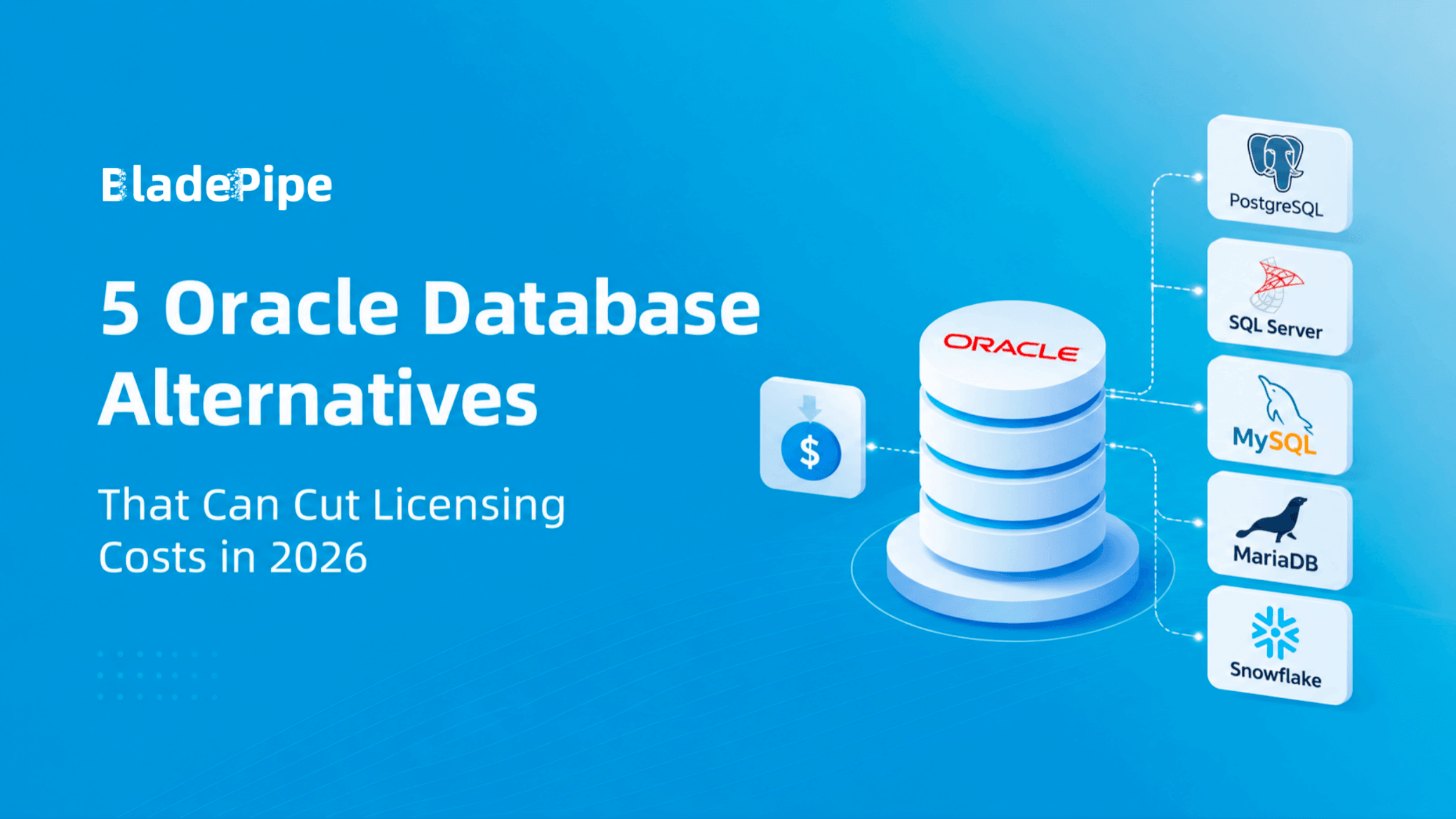
5 Best Oracle Database Alternatives for Lower-Cost Migration
Compare 5 Oracle database alternatives by cost, workload fit, migration complexity, and downtime risk, including PostgreSQL, SQL Server, MySQL, MariaDB, and Snowflake.

Start building Oracle data pipelines
Use BladePipe to connect Oracle, validate the first pipeline, and move from testing to production with observable data movement.